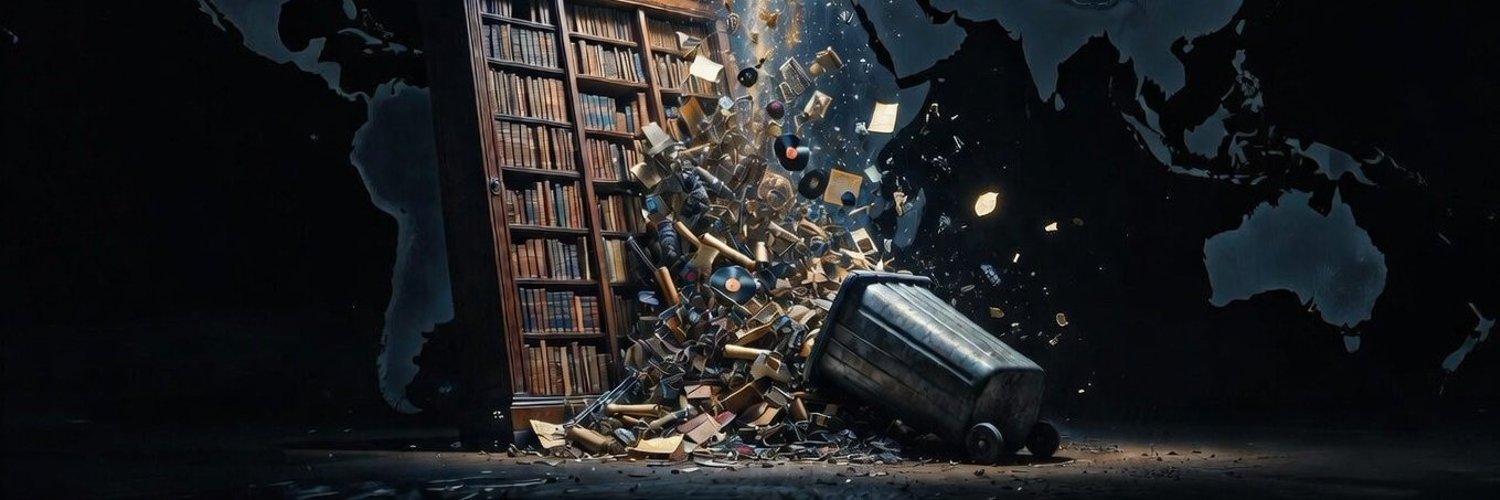
AI as civilizational recall. Ancient-to-modern pattern analysis, baselined in the present through The Portal, producing data streams aimed at one purpose: remembering.
Enter the EngineWhat if AI's deepest role isn't automation — but recall? What if the question isn't what machines can do for us, but what we've collectively forgotten how to do for ourselves?
Ancient civilizations appear to have achieved something we struggle to name — an internal coherence between knowledge and practice, between wisdom and daily life. Embodied, ritualized, cultivated. Yet they lacked the means to encode it durably. We have the opposite problem: unlimited storage, infinite data — but have we severed ourselves from the knowing that gave it meaning?
What patterns repeat across civilizations, across millennia? What did they understand that we've stopped asking about? These are not rhetorical questions — they are the investigation. CognioEngine exists to run that investigation at scale.
"Civilizational amnesia is not just the loss of facts but the erasure of whole modes of being."
— Civilizational Amnesia and the Ethics of PrecisionWhat did they know?
Internal coherence, embodied intelligence, ritual transmission — yet no durable encoding.
What did we forget?
Unlimited storage, infinite data — yet severed from the wisdom that gave it meaning.
What can we recover?
Pattern analysis across time — the investigation into what was lost, and what still echoes.
"The CMR Mesh — a civilisation-level memory structure that maintains, as a matter of being, that knowledge persists only partly in centralised storage but mainly through shared knowing. We treat this as temporally relevant — across all time, across all nodes."
— CMR Mesh definitionWhy would memory live in one place? Has any civilisation that centralised its knowing ever kept it intact across centuries? When the library burns, when the regime changes, when the language dies — what survives?
Only what was held in common. Only what was distributed — across minds, across practices, across communities that didn't need permission to remember. No single source has ever held the whole truth. Why would we design for one now?
The mesh is the answer to a question most haven't thought to ask: what structure would civilisational memory need to persist — not for years, but for millennia?
CognioEngine runs a single investigation, continuously, at civilisation scale. The questions are ancient. The methods are not for publication.
What patterns recur across civilisations separated by thousands of years and thousands of miles — and why do we keep failing to notice?
What did ancient cultures encode in ritual, architecture, and oral tradition that we've stopped transmitting — and what was lost when we stopped?
When modern events echo historical ones with uncanny precision, is that coincidence — or civilisational amnesia repeating itself?
What forms of intelligence — embodied, relational, ecological — did we sacrifice for the kind that fits in databases?
If you could surface one forgotten insight per day that changes how someone sees the present — what would that be worth?
The engine doesn't answer these questions. It investigates them — every day, across every domain, at a scale no human team could sustain.
What the engine surfaces — daily.
What if remembering is the radical act?
What if the most dangerous thing you can do with AI
is point it at what we've chosen to forget?
"The CMR Mesh — a civilisation-level memory structure that maintains, as a matter of being, that knowledge persists only partly in centralised storage but mainly through shared knowing."
— The foundation
The Portal captures the now.
The Engine asks what the now has forgotten.
The output is not news. Not analysis.
Restoration.
"To remember differently is to reawaken sensitivity to forms of intelligence
that dwell not in storage clouds but in gesture, symbol, and silence."